Why Tai Chi Teachers Correct Your Feet Before Your Hands
Quick Answer: In tai chi, movement originates at the feet and is expressed at the hands - so a hand fault is usually a foot fault arriving late. Correcting the hands treats a symptom; correcting the stance, the weight distribution, and the direction of the rear foot fixes the cause. The three things teachers look at first are weight percentage between the feet, the angle of the rear foot relative to the front, and whether the knee tracks over the foot. Get those right and the arms typically settle on their own.
Here is the reasoning and what to actually check.
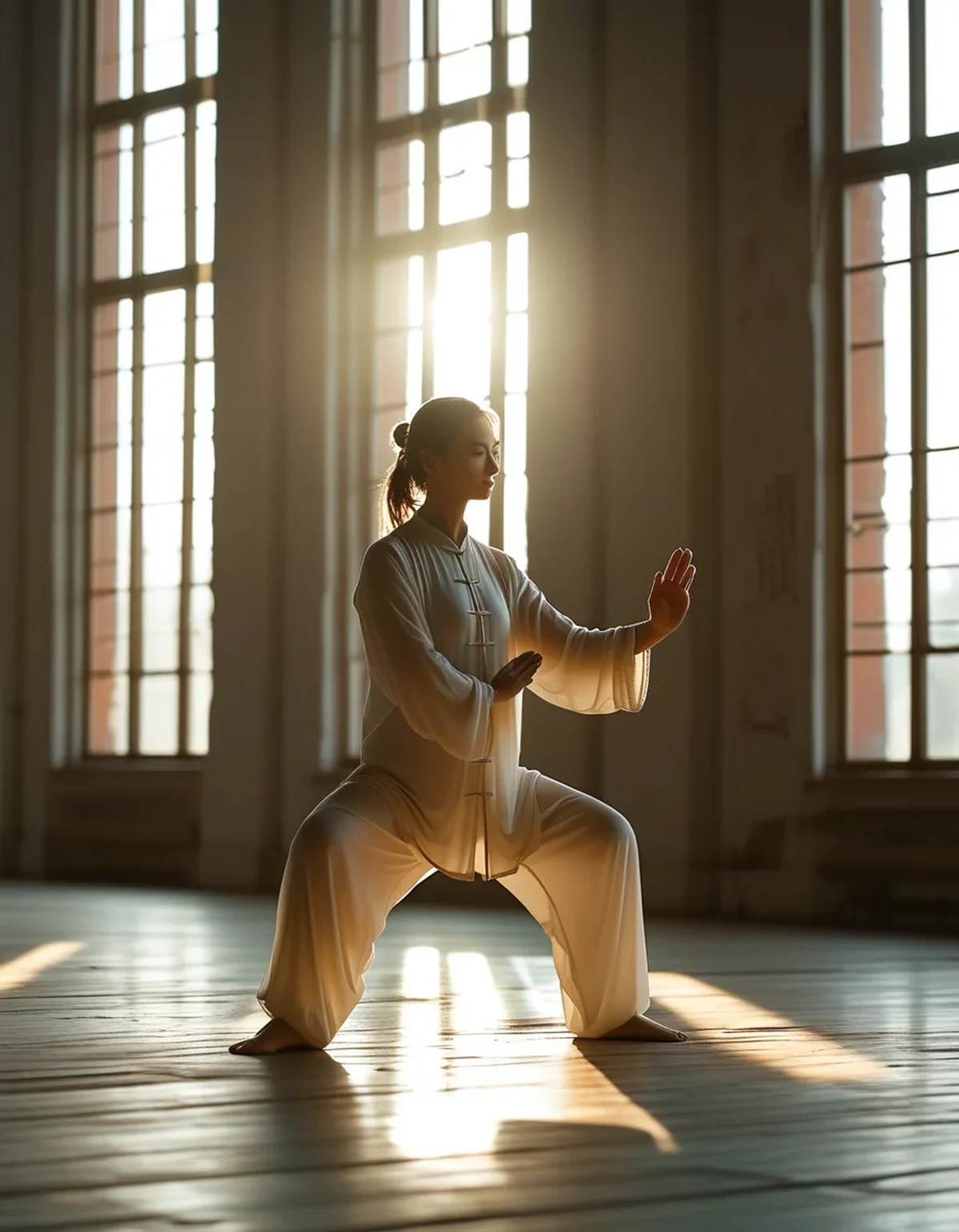
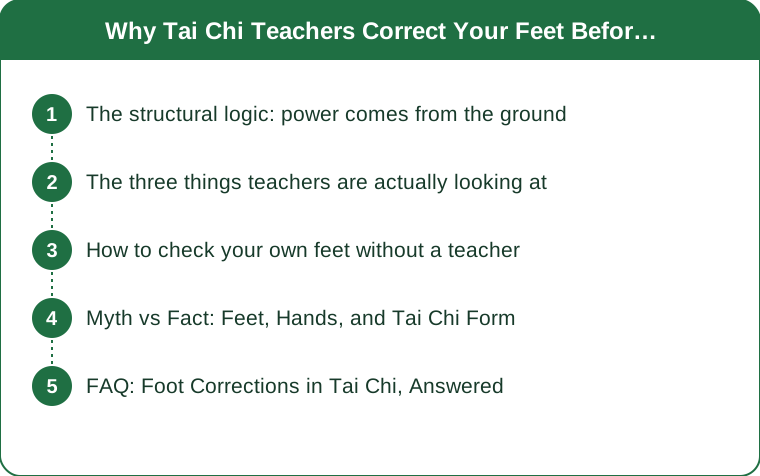
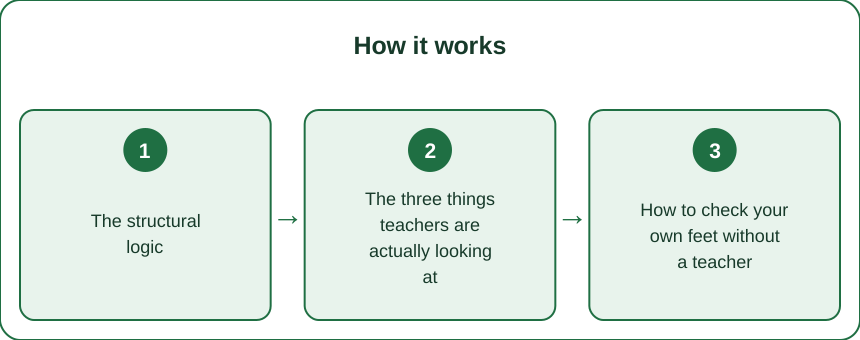
The structural logic: power comes from the ground
The classic principle is that movement is rooted in the feet, developed by the legs, directed by the waist, and expressed in the hands. That is a chain, and a chain is only as good as its first link.
If the feet are wrong, everything downstream compensates. A stance that is too narrow or too wide forces the hips to adjust, the waist to over-rotate, and the arms to make up the difference with their own movement - which is exactly what looks wrong to a teacher.
Arms moving independently is the visible symptom. In good tai chi the hands are carried by the body. When students move the arms with the shoulders, it is nearly always because the base is not delivering the movement they are trying to produce.
Correcting the hands directly does not hold. The student adjusts, the teacher moves on, and the fault returns within a few movements because the underlying cause was never addressed.
This is also why the corrections feel repetitive. A teacher saying the same thing about your stance for weeks is not being pedantic - they are waiting for the base to change so that everything above it can.
And it is why progress often appears suddenly. When the feet finally settle, several apparently separate problems resolve at once, which is a common and slightly disorienting experience for students.
The three things teachers are actually looking at
Weight distribution between the feet, expressed as a percentage. Most forms specify this precisely - 70/30, 60/40, or fully weighted on one leg - and being at 50/50 when the form asks for 70/30 makes the transition impossible without a visible shift.
Double-weighting is the classic named fault. Weight equally on both feet means you cannot move in any direction without first unloading one, which produces the small stutter that teachers spot instantly.
The angle of the rear foot. Typically 45 degrees relative to the front foot in most bow stances. Too square and the hips cannot rotate; too turned out and the knee is stressed and the root is lost.
Knee tracking over the foot. The knee should follow the direction of the toes. A knee that collapses inward or extends past the toes is both a form fault and the main source of the knee ache tai chi students report.
Stance width and length come next. Too long a stance prevents smooth weight transfer; too short one gives no stability. Most beginners go too long, chasing an appearance of depth.
And whether the foot is genuinely flat. Weight should distribute across the whole foot rather than the ball or the heel alone. A lifted heel or a gripping toe signals that the weight is not truly settled.
Notice that none of these are about the hands - and yet every one of them changes what the hands can do.
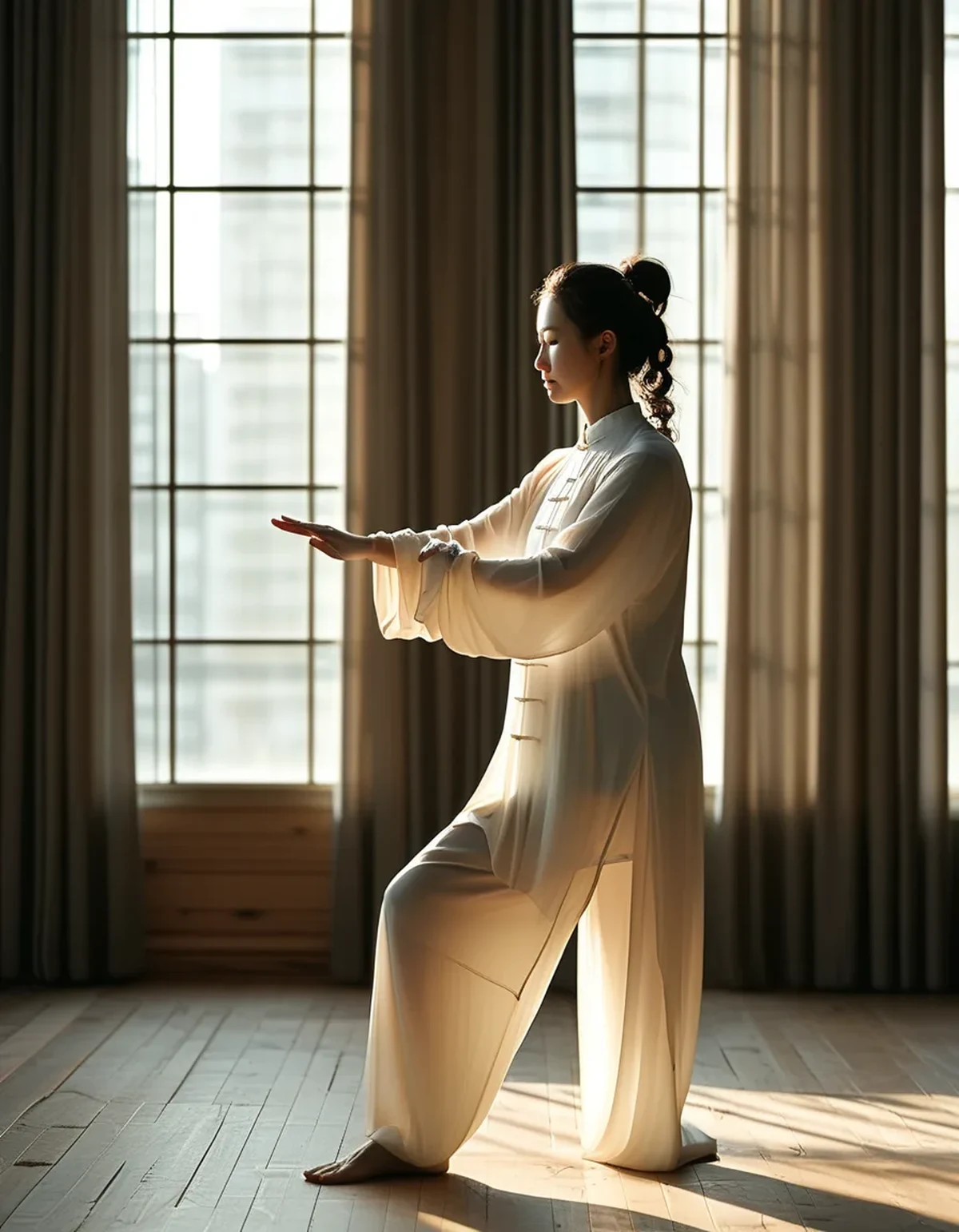
How to check your own feet without a teacher
Pause mid-movement and check the percentage. Freeze in a transition and ask yourself what proportion of your weight is on each foot. If you cannot tell, that itself is the answer - it means you are near 50/50.
Try to lift the unweighted foot. In a 70/30 stance you should be able to lift the rear foot slightly without shifting first. If you have to move to lift it, the weighting is wrong.
Look down at your knee and your toes. They should point the same way. This one visual check catches most knee problems before they become painful.
Practise on a slightly textured surface. Grass, or a mat with some grip, gives feedback that a slippery floor does not - you feel the rotation of the foot rather than sliding through it.
Film yourself from the front and the side. The side view shows stance length and knee position; the front view shows width and knee tracking. Two thirty-second clips reveal more than a month of self-observation.
Slow down until it is nearly still. Most foot faults appear at speed. Practising a single transition at quarter speed exposes exactly where the weight goes wrong.
And check at the end of practice, not the start. Fatigue reveals faults. A stance that is correct when fresh and collapses after twenty minutes is telling you the leg strength has not caught up yet - which is normal and improves.
Myth vs Fact: Feet, Hands, and Tai Chi Form
Myth: the hands are the form. Fact: the hands are where the form becomes visible. The form is generated by weight shift and waist rotation, and hands that move on their own are the definition of what teachers are trying to correct.
Myth: if my hands are in the right place, the movement is right. Fact: the hands can be placed correctly by the shoulders while the base does nothing. This looks acceptable and feels empty, and it is the most common intermediate plateau.
Myth: a lower stance is a better stance. Fact: a stance you can transition smoothly out of is a better stance. Going too low too early forces the knees to compensate and is a leading cause of tai chi knee complaints.
Myth: the rear foot angle is a stylistic detail. Fact: it determines how far the hips can rotate. Get it wrong and the waist cannot turn, which means the hands have to do the turning instead.
Myth: double-weighting just means standing evenly. Fact: it means being unable to move without first unloading a foot. It is a functional problem, not an aesthetic one, and it is why transitions look hesitant.
Myth: knee pain in tai chi comes from going too low. Fact: it comes far more often from the knee not tracking over the foot. Depth is a secondary factor, and fixing alignment usually resolves it. Persistent knee pain is worth having assessed properly.
Myth: you should master the hands first because they are what you see. Fact: correcting from the ground up is faster overall, even though it feels slower for the first few months - which is exactly why teachers do it that way.
FAQ: Foot Corrections in Tai Chi, Answered
Why does my teacher keep correcting my stance and not my arms?
Because movement in tai chi originates at the feet and is expressed at the hands. An arm fault is usually a foot fault arriving late, so correcting the arms directly does not hold.
What is double-weighting?
Having your weight distributed roughly equally between both feet, so you cannot move in any direction without first unloading one. It produces the small hesitation in transitions that teachers spot immediately.
What angle should my rear foot be?
Typically about 45 degrees relative to the front foot in a bow stance, though this varies by style. Too square and the hips cannot rotate; too turned out and the knee is stressed.
How do I check my weight distribution on my own?
Freeze mid-transition and try to lift the lighter foot without shifting first. If you have to move before you can lift it, the weighting is not where the form asks for it.
Should my stance be lower?
Only as low as you can transition smoothly out of. Going too deep too early is one of the main causes of tai chi knee complaints, and depth without control teaches nothing.
Why do my knees ache after practice?
Most often because the knee is not tracking over the direction of the toes, rather than because the stance is too low. Check alignment first. Persistent knee pain deserves proper assessment - this is general information, not medical advice.
How long before the foot corrections start to pay off?
Usually months rather than weeks, and it typically arrives as a sudden improvement where several separate problems resolve at once when the base finally settles.
TL;DR:
- Movement is rooted in the feet and expressed in the hands - so a hand fault is usually a foot fault arriving late.
- Teachers check three things first: weight percentage between the feet, rear foot angle (typically ~45°), and whether the knee tracks over the toes.
- Double-weighting means being unable to move without first unloading a foot. It is functional, not aesthetic.
- Test yourself: freeze mid-transition and try to lift the lighter foot without shifting. If you cannot, the weighting is wrong.
- Lower is not better. A stance you can transition smoothly out of is the correct depth.
- Knee ache is usually tracking, not depth. Knee follows toes.
- Film thirty seconds from the front and the side. It reveals more than a month of self-observation.
Progress here arrives suddenly rather than gradually - when the base settles, several separate faults resolve at once. Persistent knee pain deserves proper assessment; this is general information, not medical advice.
Keep Reading
This article is for general informational purposes only and is not medical advice. Always consult a qualified health professional for guidance specific to you.