Why Tai Chi Beginners Should Master Weight Shifting Before Learning Any Full Form
New tai chi students often start memorizing form sequences right away, without first learning the single skill nearly every movement depends on: clear, controlled weight shifting between the feet, which underlies the stability and smoothness of the entire practice regardless of which specific form is being learned.

Why Unclear Weight Distribution Undermines Every Tai Chi Movement Regardless of Form Complexity
The foundational-dependency logic: the nearly-every-tai-chi-movement-requires-knowing-exactly-how-much-weight-sits-on-each-leg-at-a-given-moment (the the practice’s characteristic slow, controlled movement depending on precise, continuous weight awareness — the every-movement-requires-precise-weight-awareness), the the-unclear-weight-distribution-produces-wobbling-or-rushed-transitions-between-postures (the the visible instability students experience often tracing back to this single unaddressed factor — the unclear-weight-produces-wobbling), the the-memorizing-a-forms-sequence-of-movements-doesnt-address-the-underlying-weight-control-skill (the learning choreography being a separate skill from the weight control that makes the choreography look and feel correct — the memorizing-sequence-doesnt-fix-weight-control), and the reframe (instability in tai chi practice usually reflecting a missing weight-shift foundation rather than a forms-memorization problem, however far into the sequence a student has progressed)).

The Specific Weight-Shift Drill That Builds the Foundation
The actual drill: the practice-shifting-weight-slowly-and-completely-from-one-leg-to-the-other-without-any-arm-movement (the isolating the weight-shift skill entirely from the added complexity of arm and hand positions — the isolate-weight-shift-without-arm-movement), the the-pause-at-full-weight-on-one-leg-before-beginning-the-shift-to-the-other (the a deliberate pause confirming complete, stable weight transfer rather than a partial or rushed one — the pause-at-full-weight-before-shifting), the the-narrate-or-notice-the-percentage-of-weight-on-each-leg-throughout-the-shift (the building conscious awareness of a sensation that eventually needs to become automatic — the notice-weight-percentage-throughout-shift), and the frame (shifting weight slowly and fully without arm movement, pausing at full weight before transferring, and consciously noticing weight distribution throughout — a drill that isolates and builds the one skill every form depends on).
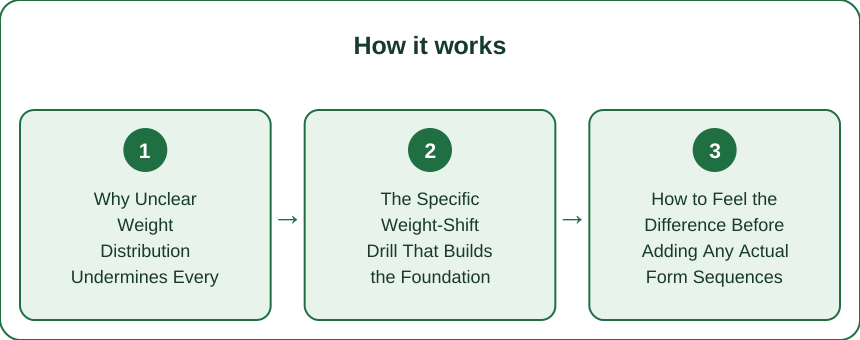
How to Feel the Difference Before Adding Any Actual Form Sequences
The readiness check: the practice-the-weight-shift-drill-until-it-feels-stable-and-unhurried-without-conscious-effort (the the drill needing to become comfortable and automatic before layering on more complexity — the drill-feels-automatic-before-adding-complexity), the the-add-a-single-simple-arm-movement-to-the-weight-shift-before-attempting-a-full-form-sequence (the a small, incremental addition testing whether the weight-shift foundation holds under slightly more complexity — the add-one-simple-arm-movement-first), the the-only-begin-learning-a-full-form-once-weight-shifting-stays-stable-with-that-added-movement (the sequencing full form learning after the foundation has been tested and holds — the begin-form-only-after-foundation-holds-with-movement), and the frame (practicing the weight-shift drill until automatic, adding one simple arm movement as a test, and only then beginning a full form — a progression that builds stability into the foundation before adding the complexity of an entire sequence).
New tai chi students often start memorizing form sequences right away, without first learning the skill nearly every movement depends on: clear, controlled weight shifting between the feet, since unclear weight distribution produces the wobbling and rushed transitions many beginners experience, and memorizing choreography doesn’t address that underlying weight-control skill on its own. The drill that builds it is shifting weight slowly and completely from one leg to the other with no arm movement involved, pausing at full weight on one leg before transferring, and consciously noticing the weight distribution throughout the shift. Before adding any actual form sequence, practice that drill until it feels stable and automatic, add a single simple arm movement as a test of whether the foundation holds under a bit more complexity, and only begin learning a full form once weight shifting stays stable with that added movement.
Keep Reading
This article is for general informational purposes only and is not medical advice. Always consult a qualified health professional for guidance specific to you.