What Push Hands Actually Teaches That Solo Tai Chi Practice Can't
Quick Answer: Push hands is a partnered tai chi exercise where two practitioners maintain light contact and gently test each other’s balance, structure, and sensitivity — it reveals weaknesses in rootedness and relaxation that solo form practice, done without any external resistance, simply can’t expose.
Solo forms teach the shapes and sequences of tai chi, but they don’t test whether your body actually holds its structure under any outside pressure — that’s specifically what push hands is designed to reveal.
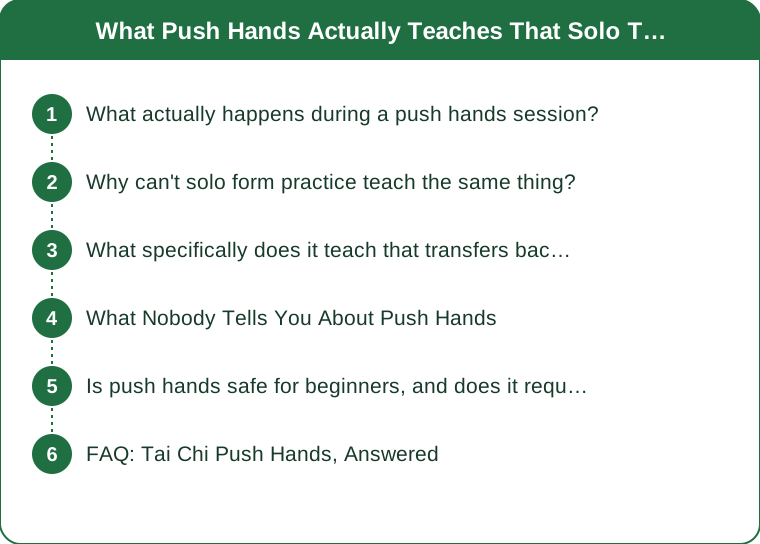
What actually happens during a push hands session?
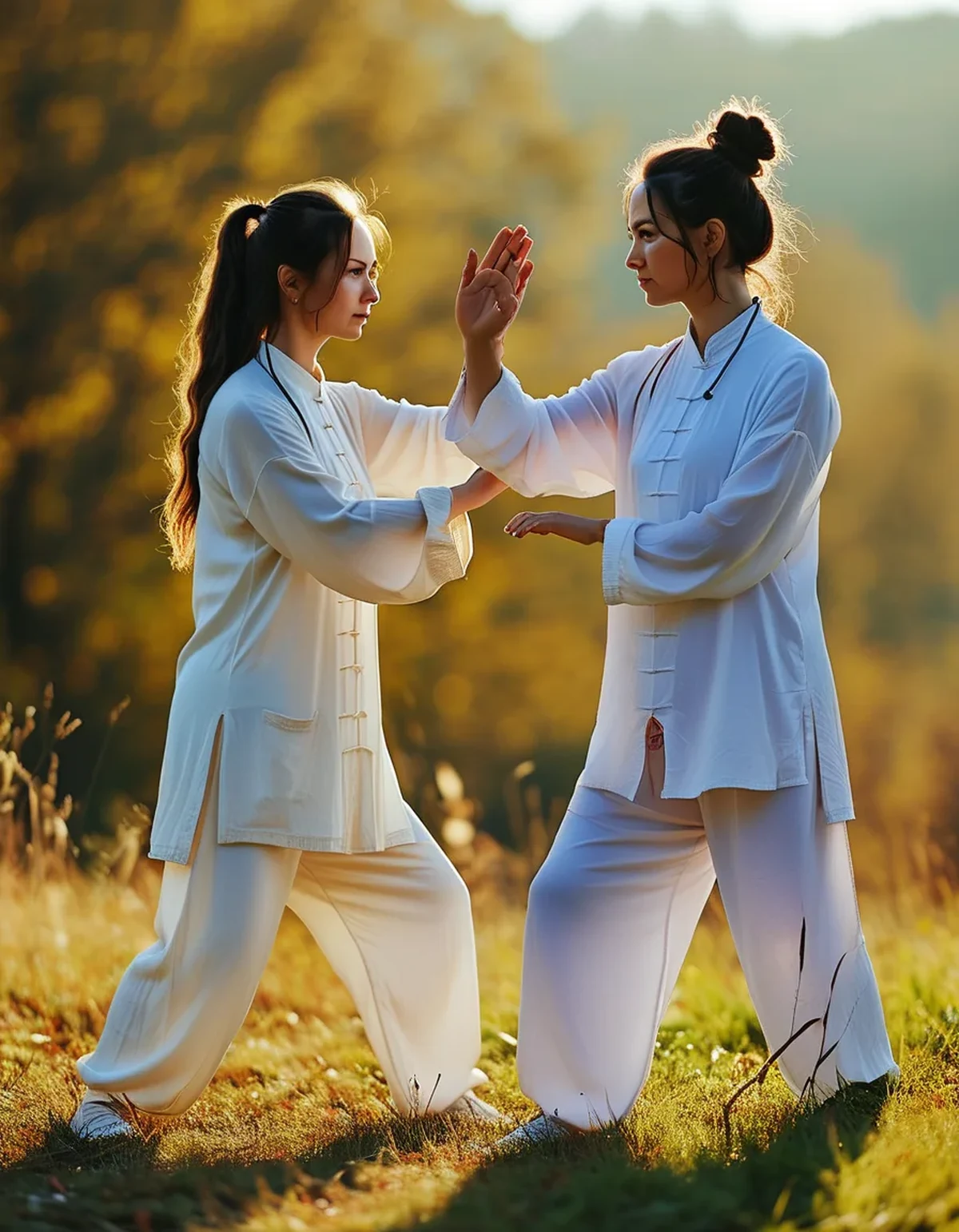
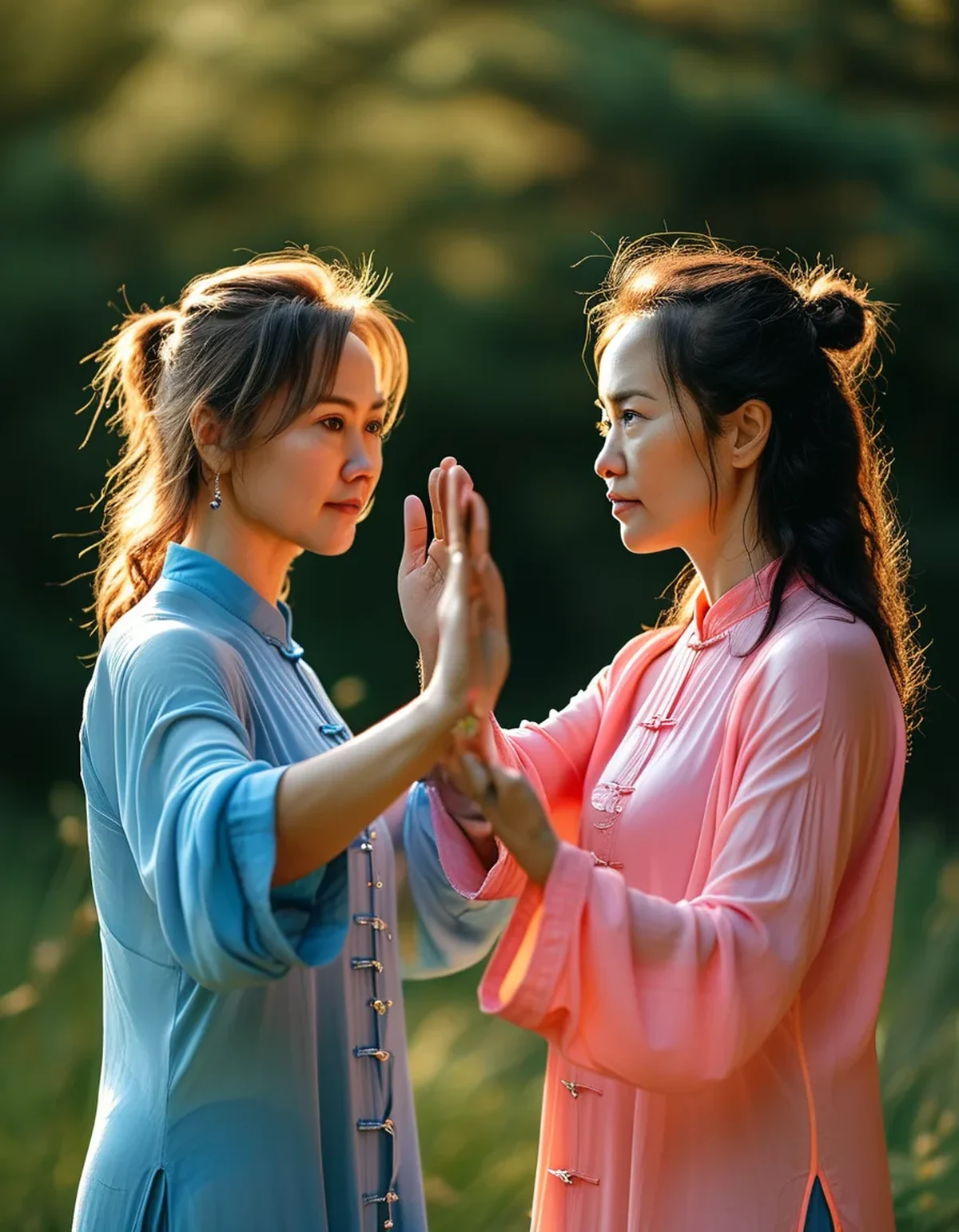
Two practitioners stand in light contact, usually at the wrists or forearms, and take turns gently pushing and yielding, testing whether the other person’s structure stays rooted and relaxed or gets pushed off balance. It’s not a competitive shoving match — cooperative, beginner-level push hands is slow, light, and focused on sensitivity, not on winning.
Why can’t solo form practice teach the same thing?
Solo forms are performed against no external resistance at all, so it’s entirely possible to move through a form with subtly poor structure or tension and never notice, since nothing is testing it. Push hands immediately reveals hidden tension or poor weight distribution the moment a partner applies even light pressure — problems that stayed invisible in solo practice show up instantly.
What specifically does it teach that transfers back into solo practice?
Sensitivity to your own balance and tension is the biggest transferable skill — after push hands practice, many students report noticing subtle imbalances in their solo form that they never picked up on before, simply because their body has now learned what genuine rootedness under pressure feels like. It also teaches relaxation under pressure specifically — the instinct to tense up when pushed is exactly what push hands trains you to unlearn, replacing it with yielding and redirecting instead.
What Nobody Tells You About Push Hands
Beginners almost universally try to use muscular strength to resist a push, which push hands is specifically designed to expose as inefficient — the practice rewards structure and timing over raw strength, which is often a genuinely humbling realization for physically strong beginners early on. It’s normal to feel clumsy and easily unbalanced in early sessions, even for students who feel confident in solo forms — this is a completely different skill being tested, not a regression in your form practice.
Is push hands safe for beginners, and does it require a lot of physical contact?
Beginner-level push hands is low-intensity and low-risk when taught properly — light wrist or forearm contact, slow pace, and a cooperative rather than competitive framing. It’s worth confirming your instructor introduces it gradually and emphasizes safety and cooperation over competition, especially in early sessions, since more advanced or competitive push hands can involve more force and requires a stronger foundation first.
FAQ: Tai Chi Push Hands, Answered
Do I need a certain level of solo form experience before trying push hands?
Most schools introduce basic push hands fairly early, even to beginners, since it reinforces fundamentals rather than requiring advanced skill first — check with your specific instructor for their approach.
Is push hands the same as tai chi self-defense training?
They’re related but distinct — push hands builds sensitivity and structural awareness that underlies self-defense application, but isn’t itself a self-defense class in the way a martial application class would be.
Can push hands be practiced solo if I don’t have a partner available?
Not really — the entire value comes from responding to another person’s real, unpredictable input; solo practice can build supporting skills like balance and structure, but can’t replicate the sensitivity training push hands specifically provides.
TL;DR:
- Push hands is a partnered exercise that tests balance, structure, and sensitivity under light resistance
- Solo forms can’t reveal hidden tension or poor weight distribution the way partner pressure immediately does
- The core transferable skill is relaxing under pressure instead of instinctively tensing up
- Beginner-level push hands is cooperative and low-intensity, not a competitive contest
Push hands isn’t a separate discipline from your solo form practice — it’s the test that shows whether that practice actually built what it was supposed to.
Keep Reading
This article is for general informational purposes only and is not medical advice. Always consult a qualified health professional for guidance specific to you.