Why Tai Chi Feels Completely Different Outdoors in Wind (and How to Adapt)
Quick Answer: Wind disrupts tai chi’s slow, controlled weight shifts by adding an unpredictable external force your indoor practice never accounts for. Widen your stance slightly, shorten your single-leg balance transitions, and orient your practice with the wind at your side rather than your back for the most stability.
Indoors, your tai chi form is smooth and controlled. Take the same form outside on a breezy day and suddenly you’re wobbling through moves that felt automatic five minutes earlier. That’s not a skill regression — it’s a genuinely different balance challenge.
Why does wind specifically disrupt tai chi more than other exercise?
Because tai chi’s core skill is extremely slow, deliberate weight transfer, often balancing on one leg for extended moments. That slowness is exactly what makes wind’s effect so noticeable — a quick movement barely registers a gust, but a slow, sustained single-leg stance gives wind much more time to act on your balance.
Indoor practice never trains this specific challenge, so the adaptation genuinely has to happen outdoors, gradually.
How should you adjust your stance for wind?
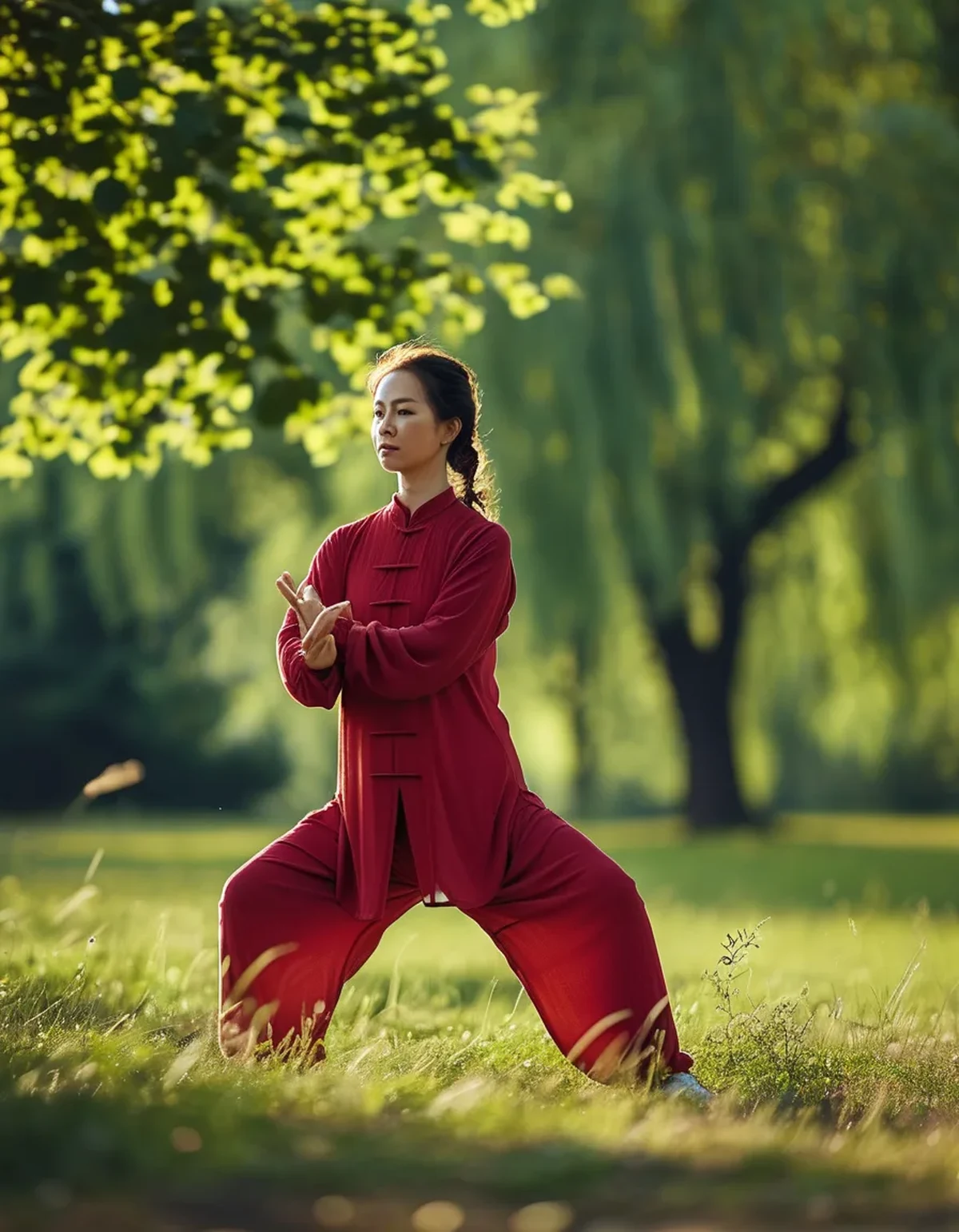
Widen your base stance slightly beyond your usual indoor width — a few extra inches of width meaningfully lowers your center of gravity’s sensitivity to a lateral gust. Keep your weight very slightly lower and your knees a touch more bent than your indoor form, which further improves stability without fundamentally changing the movement.
For single-leg balance moves specifically, consider holding them for a shorter count than you would indoors until you’ve built outdoor-specific balance confidence.

Does wind direction relative to your body matter?
Yes — practicing with wind hitting your side is generally more manageable than wind at your back, which can push you forward unexpectedly during forward-leaning moves, or wind directly in your face, which can make breathing coordination slightly harder during a long form.
If you have the option, orient your starting position so prevailing wind hits your side rather than your front or back, and adjust as the form progresses if you notice a particular direction causing more wobble.
What Nobody Tells You About Outdoor Tai Chi Practice
Many experienced practitioners consider wind, uneven ground, and other outdoor variables to be a valuable part of the practice, not an obstacle to work around — traditional tai chi lineages often specifically value outdoor practice for exactly this reason. The instability isn’t a flaw in the conditions; it’s arguably training a more complete, adaptable balance than indoor practice alone ever could.
Reframing wind as an intentional part of the challenge, rather than an interruption, tends to reduce the frustration considerably.
FAQ: Outdoor Tai Chi Questions, Answered
At what wind speed should I move my practice indoors?
There’s no universal cutoff, but if you find yourself unable to complete basic weight shifts without repeated correction, that’s a reasonable personal signal to practice indoors that day instead.
Does uneven outdoor ground affect tai chi the same way wind does?
Similarly, yes — uneven ground adds a comparable balance challenge, and the same wider-stance, lower-center-of-gravity adjustments help with both.
Will practicing in wind improve my indoor balance too?
Many practitioners report exactly that — the extra balance demand outdoors tends to make indoor practice feel noticeably more stable and controlled by comparison.
TL;DR:
- Wind disrupts tai chi’s slow single-leg transitions more than faster exercise
- Widen your stance and lower your center of gravity slightly for outdoor practice
- Orient wind to hit your side rather than your front or back when possible
- Traditional practice often values outdoor instability as part of the training, not an obstacle
Give yourself a few outdoor sessions to adapt — the wobble fades faster than you’d expect once your balance calibrates to the added variable.
Keep Reading
This article is for general informational purposes only and is not medical advice. Always consult a qualified health professional for guidance specific to you.