Why Your Knees Ache More Than Your Hips in Tai Chi (It's a Weight Distribution Issue)
Quick Answer: Knee ache in tai chi usually means weight is loading straight down through a bent knee instead of shifting through the hip and ankle as intended — the knee becomes a weight-bearing hinge rather than a soft joint following the hip’s lead, which is the actual root cause in most cases, not knee weakness itself.
If your hips feel fine but your knees complain every session, the issue isn’t your knees — it’s what’s happening one joint up.
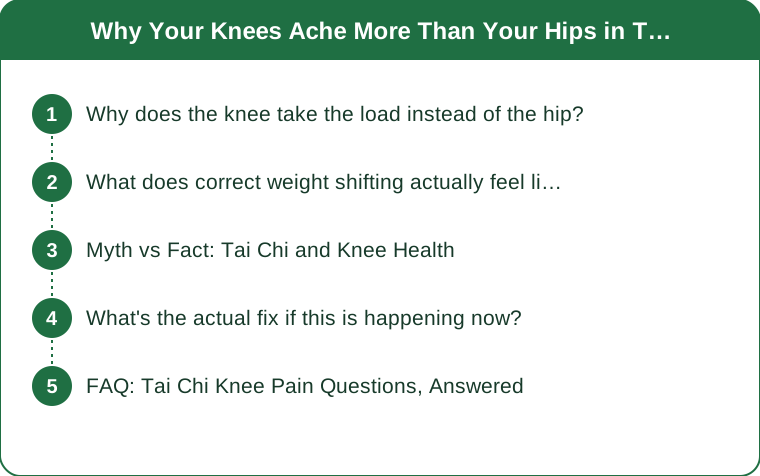
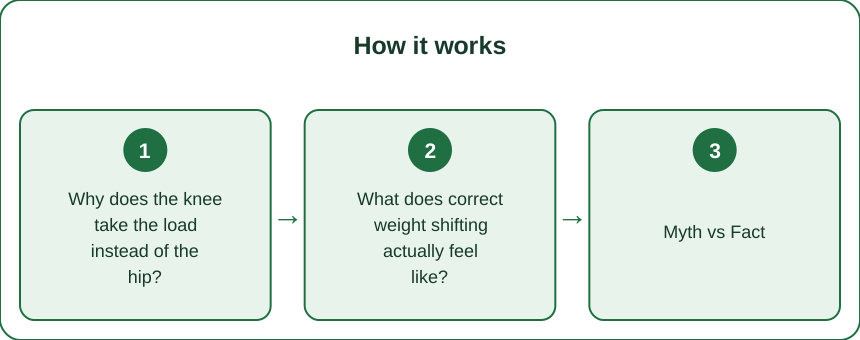
Why does the knee take the load instead of the hip?
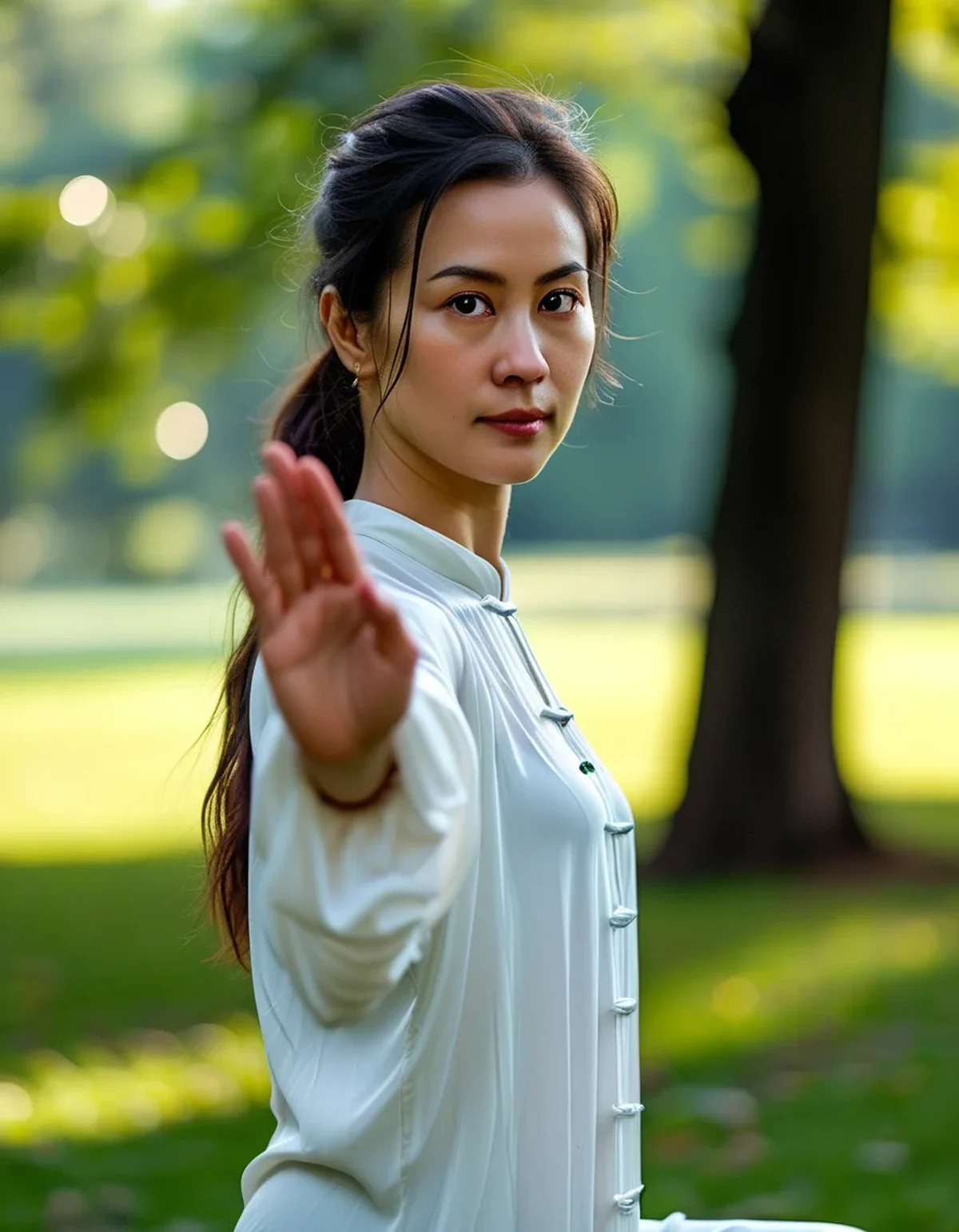
In correct tai chi weight shifting, the hip initiates the movement and the knee tracks in the same direction the toes point, staying relatively soft. When the hip stays passive and the knee bends and twists to compensate, the knee absorbs rotational and vertical load it isn’t built to handle well over repeated slow-motion reps.
What does correct weight shifting actually feel like?
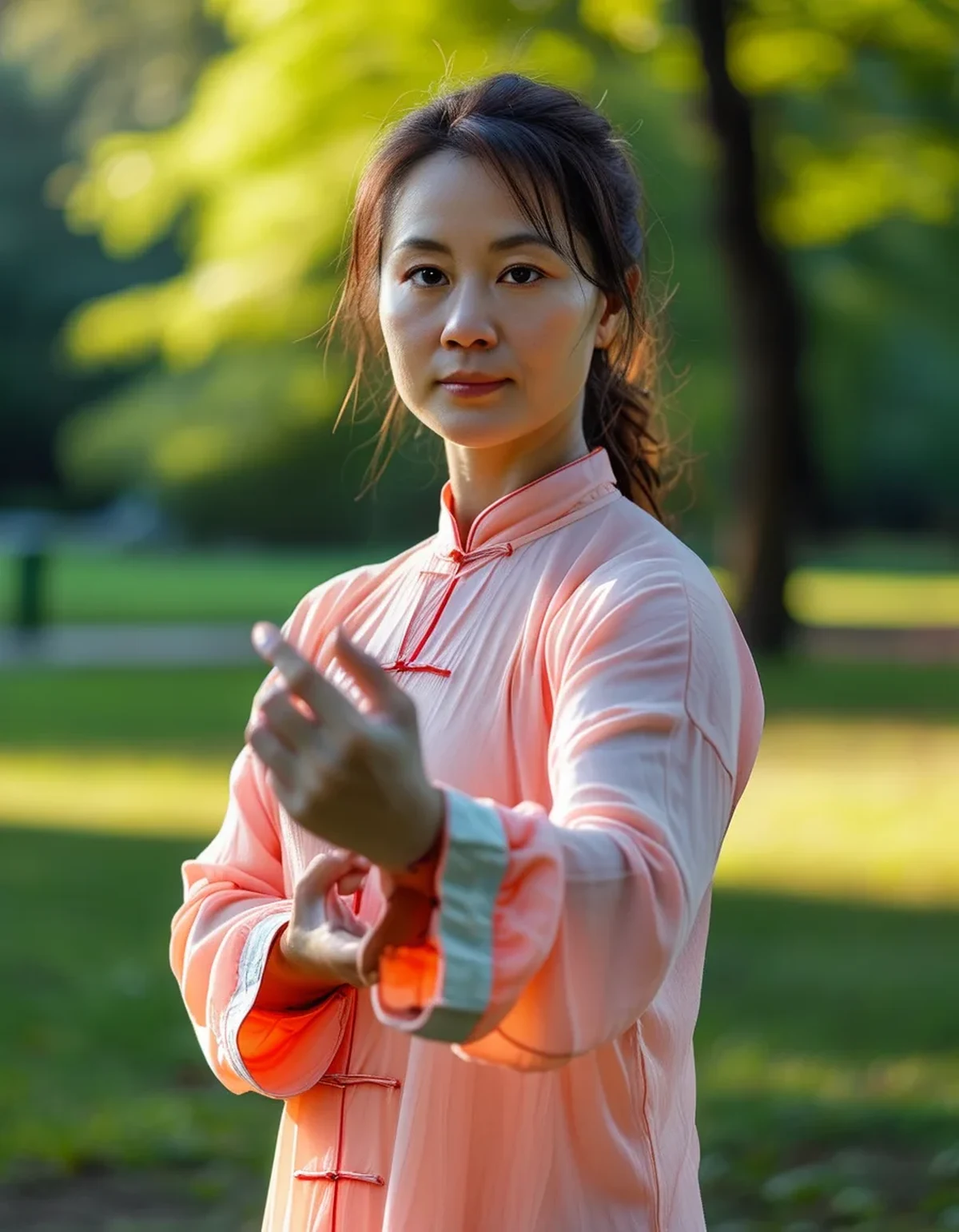
The weight should feel like it’s traveling through the center of the foot and up through a stacked ankle-knee-hip line, not concentrated on the inside or outside edge of the knee. A simple check: pause mid-transition and look down — your knee should point the same direction as your toes, not caved inward or twisted outward.
Myth vs Fact: Tai Chi and Knee Health
Myth: Tai chi is inherently low-impact, so knee pain means you’re doing something medically wrong. Fact: Tai chi is low-impact compared to running or jumping, but sustained slow-motion loading with poor alignment can still stress a joint — form matters as much as the style’s reputation for gentleness.
Myth: Bending the knees more shows deeper stance mastery. Fact: Stance depth should match your current hip and ankle mobility — forcing a deeper bend than your joints support to look more advanced is a common cause of knee strain in newer practitioners.
What’s the actual fix if this is happening now?
Shorten your stance width and reduce bend depth for several weeks while consciously checking the knee-toe alignment on every transition. Building hip and ankle mobility through basic mobility drills outside of tai chi practice also reduces how much compensatory work the knee has to do.
FAQ: Tai Chi Knee Pain Questions, Answered
Should you stop practicing tai chi if your knees ache?
Mild ache that resolves with rest and correction usually doesn’t require stopping — sharp or persistent pain past a couple weeks warrants seeing a physical therapist. This is general information, not medical advice.
Does footwear matter for knee alignment in tai chi?
Yes — a flat, flexible sole that lets your foot feel the ground helps maintain proper alignment more than a cushioned athletic shoe does.
Is one style of tai chi easier on the knees than another?
Generally, styles with higher stances (some Yang style variations) place less sustained load on the knees than lower, more athletic Chen style forms — worth considering if knee ache persists.
TL;DR:
- Knee ache in tai chi is usually a weight-distribution issue, not a knee problem itself
- The hip should initiate movement; the knee should track toes and stay relatively soft
- Check knee-toe alignment mid-transition as a quick self-diagnostic
- Shortening stance width and depth temporarily often resolves the ache while form improves
This is general information, not medical advice — but most tai chi knee ache responds well to an alignment fix rather than rest alone.
Keep Reading
This article is for general informational purposes only and is not medical advice. Always consult a qualified health professional for guidance specific to you.