Tai Chi for Beginners: The Slowest Workout With the Fastest-Growing Fanbase
In a fitness culture obsessed with harder, faster and sweatier, tai chi commits the ultimate rebellion: it slows down. And yet this centuries-old moving meditation keeps racking up modern research wins — better balance, lower stress, easier joints, steadier blood pressure. It is strength training whispered instead of shouted, and it may be the most sustainable exercise a woman can practice for the next fifty years.
What Tai Chi Actually Is
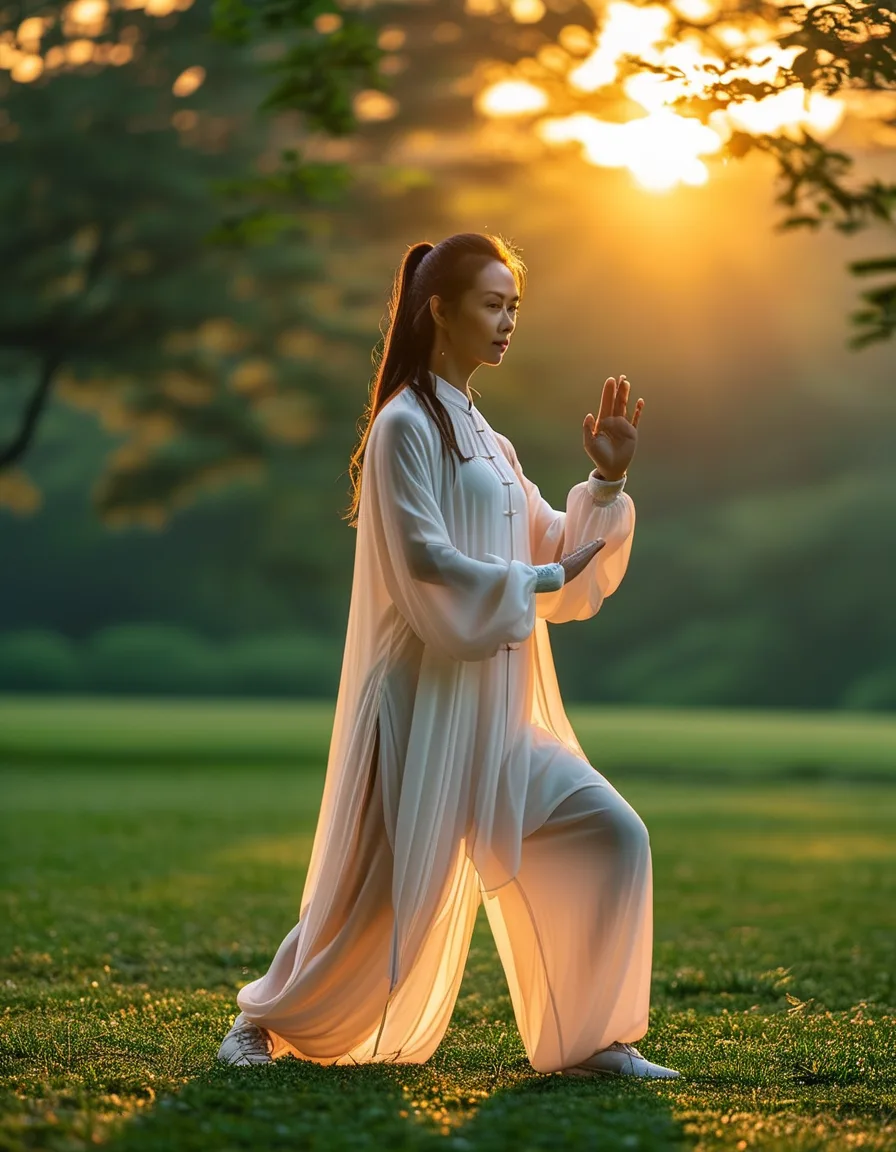
Tai chi is a sequence of slow, continuous, flowing movements — a form — performed with soft knees, an upright spine and full attention. It began as a Chinese martial art and evolved into what researchers now call meditation in motion. There is no impact, no equipment and no athletic prerequisite, which is why hospitals and universities keep studying it and why practitioners range from stressed executives to nimble ninety-year-olds.
The Benefits Science Keeps Confirming
The research pile is genuinely impressive: tai chi reduces fall risk dramatically in older adults by rebuilding balance and leg strength, meaningfully lowers stress and anxiety scores, eases arthritis stiffness, and supports healthy blood pressure. For women, the balance and bone-loading benefits compound with age — the slow weight shifts are essentially single-leg strength training in disguise. It is preventive medicine choreographed beautifully.
Your First Moves, Tonight, in Your Kitchen
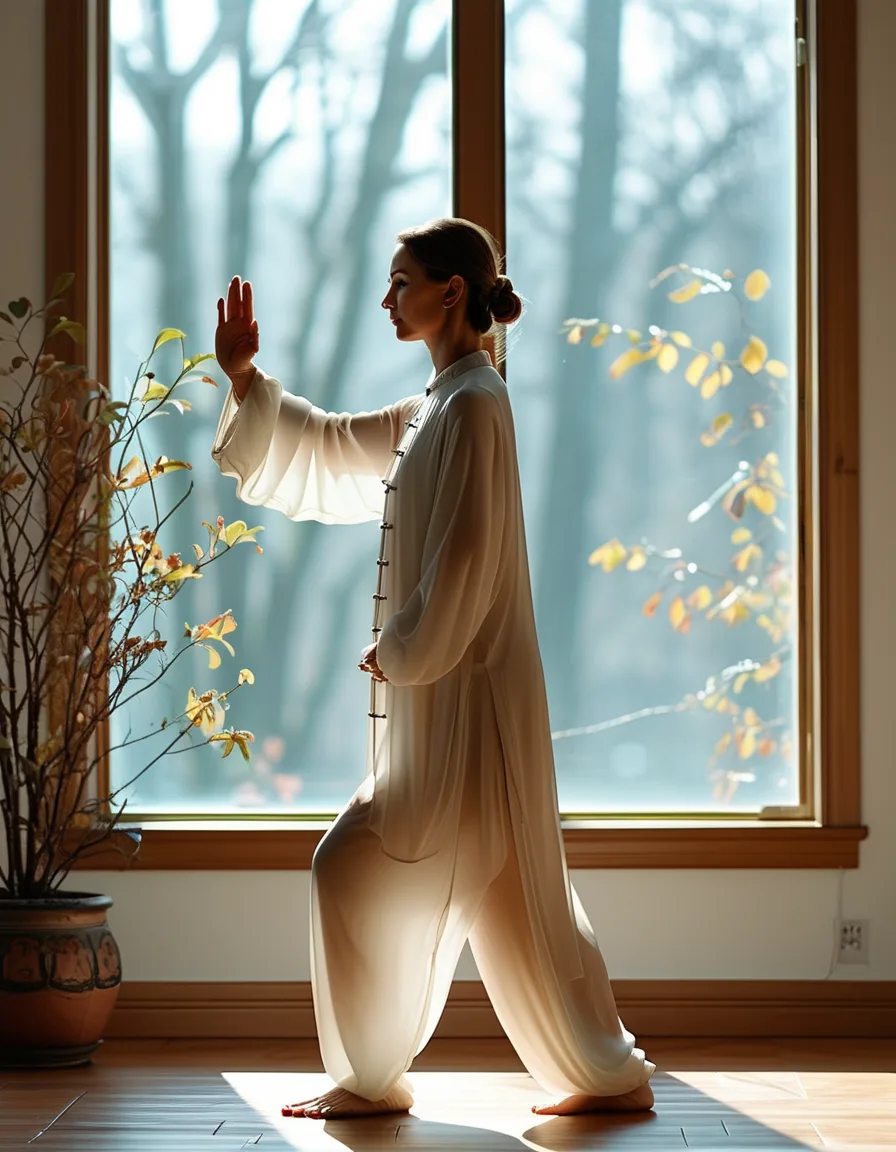
Try this now: stand feet hip-width, knees soft. Slowly shift your weight entirely to your right leg over four counts, then back to the left — feel your foot muscles wake up. Add arms: as you shift, let your arms float up to chest height as if resting on water, and sink as you settle. Congratulations, you are doing tai chi weight shifting, the foundation of everything. Ten slow minutes of this is a legitimate session and an even better nightcap.
Finding Classes and Styles (Simplified)
You will meet style names — Yang (the most common, graceful and beginner-friendly), Chen (more athletic), Sun (gentlest, popular for arthritis). As a beginner, ignore the taxonomy and find a patient teacher: community centers, YMCA branches and park groups run inexpensive classes everywhere, and summer park sessions are their own quiet pleasure. Online, search for the 8-form or 24-form Yang style — short routines you can genuinely learn in a few weeks.
Why Slow Is the Point
Moving slowly is not the easy version — it is the honest one. Slowness removes momentum, so your muscles hold and control every inch, and it removes distraction, so your mind has nowhere to go but here. Practitioners describe the after-feeling as wrung-out calm: the body worked, the nervous system soothed. In a week where everything demands you rush, twenty slow minutes is not a workout compromise. It is the counterweight.
Tai chi asks for no sweat, no equipment and no flexibility — only twenty minutes and your full attention, which is somehow both the easiest and rarest price in fitness. Learn the weight shift this week, find a park class this month, and let the slowest workout you have ever done quietly become the one your balance, joints and blood pressure thank you for decades from now.
Keep Reading
This article is for general informational purposes only and is not medical advice. Always consult a qualified health professional for guidance specific to you.