The Balance Prescription: Why Doctors Keep Recommending Tai Chi
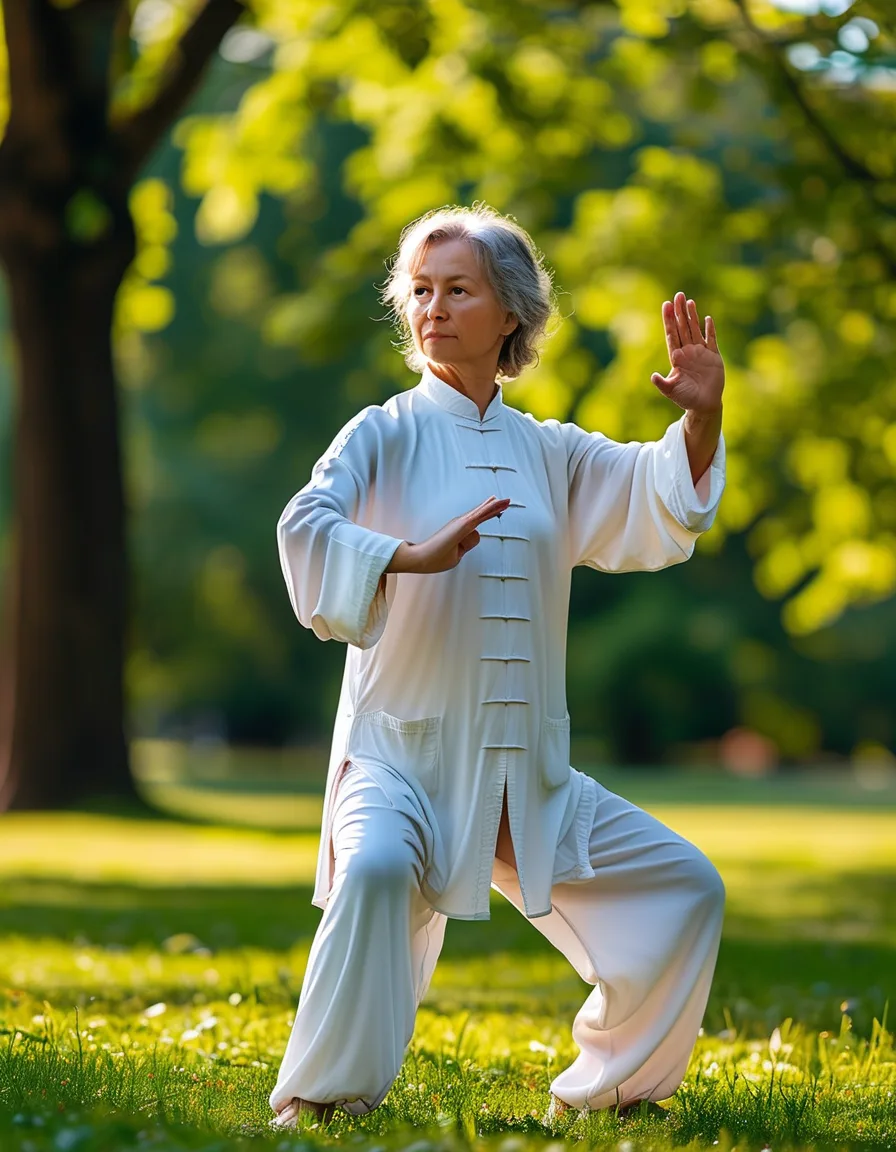
Tai chi crossed from park pastime to clinical prescription on the strength of one evidence base: fall prevention — where it outperforms most alternatives so consistently that health systems now fund classes. The balance prescription, explained from mechanism to starting dose.
The Evidence Headline
The trials are unusually unanimous: tai chi reduces fall risk substantially in older adults — meta-analyses land on meaningful double-digit reductions, enough for clinical guidelines and insurance-funded programs. In fall-prevention’s evidence rankings, tai chi sits at the top table.
The Mechanism Bundle
Why it works: the slow weight shifts are single-leg strength training in disguise (every form is a controlled balance transfer), the constant ankle-and-hip adjustments train the exact wobble-recovery reflexes falls exploit, and the head-turning, direction-changing choreography rebuilds the vestibular confidence age erodes. It is balance training that doesn’t feel like drills.

The Earlier-Is-Better Clause
The prescription reads ‘older adults’ but the training logic compounds from midlife: balance peaks early and quietly declines — the fifty-year-old’s tai chi practice is the eighty-year-old’s intact hip (the bone guide’s fracture equation, trained on the fall side). Starting before balance becomes a problem is the entire strategy.
The Starting Dose
The studied protocols: two-ish sessions weekly, simplified forms (the 8-form is the clinical workhorse), 12-plus weeks for measured effects — community centers, YMCAs and parks host exactly this. The home supplement: the weight-shift practice from any beginner video, ten minutes daily. Gentle, evidence-stamped and prescribed by people in white coats: the park pastime earned its clinic.
Double-digit fall reduction, single-leg strength in slow motion, start before it’s needed. Tai chi’s gentleness was never the absence of training — it was the disguise the evidence eventually saw through.
Keep Reading
This article is for general informational purposes only and is not medical advice. Always consult a qualified health professional for guidance specific to you.