Ten Minutes of Slow: A Morning Tai Chi Routine for Non-Masters
The full tai chi curriculum spans years; the morning routine needs ten minutes and three movements. The non-master’s wake-up form — weight shifts, the flowing arms, the turning step — borrows the method’s essence without the syllabus. Slow, done badly, still works.
Movement One: the Weight Shift
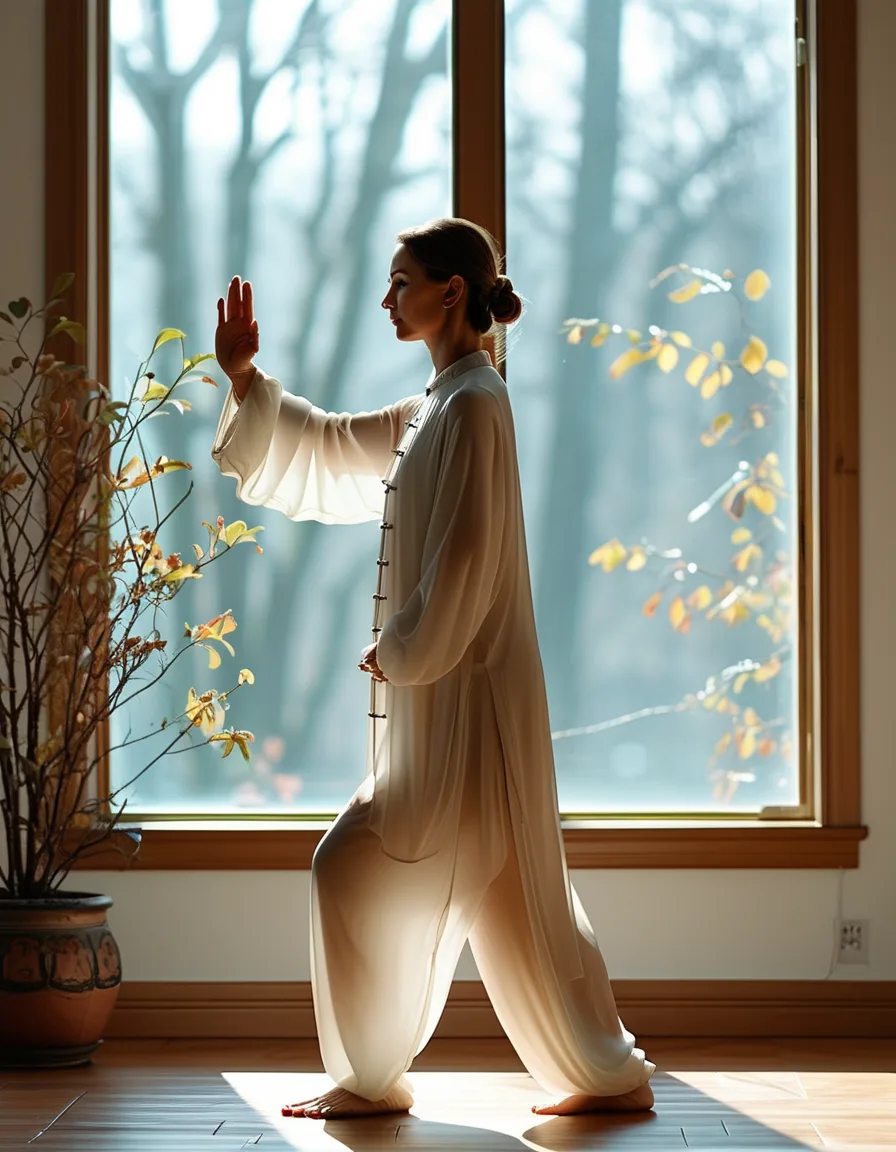
Feet wide, knees soft: pour your weight slowly left over four counts, then right — arms floating up as you shift, sinking as you settle. Two minutes. This is tai chi’s atom, and it doubles as the balance prescription’s home edition.
Movement Two: the Flowing Arms
Standing center: arms rise slowly on the inhale (wrists soft, as if resting on water), lower on the long exhale — the breath drives the tempo, not the reverse. Two minutes of this synchronization is the routine’s nervous-system dividend; the arms are just the visible part.

Movement Three: the Turning Step
The gentle stepping form: shift weight, step out slowly, arms sweeping with the turn, then return — alternating sides, unhurried, like the world’s calmest lunge negotiation. Coordination, hips and the vestibular nudge, two more minutes.
The Assembly and the Attitude
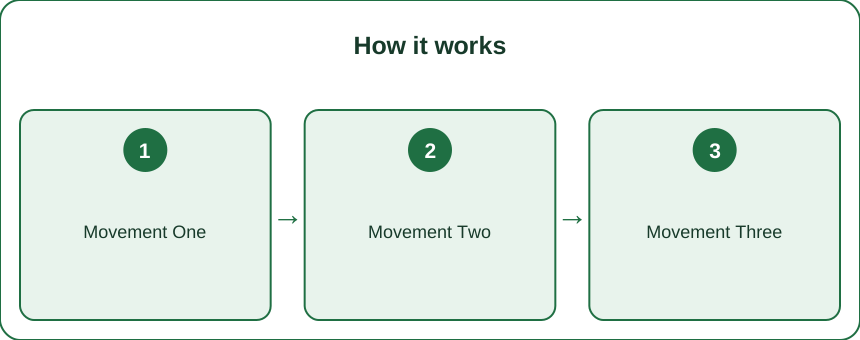
The ten-minute shape: two minutes each movement, then four minutes of free-form flow (combine them badly with full permission — precision is the decade project; presence is the morning one). Park, balcony or kitchen; barefoot preferred; phone elsewhere. The routine’s only failure condition is rushing it, which is also its whole lesson.
Pour the weight, float the arms, step and turn, combine imperfectly. The masters have their decades — the morning has ten minutes, and the slowness works at every skill level including none.
Keep Reading
This article is for general informational purposes only and is not medical advice. Always consult a qualified health professional for guidance specific to you.